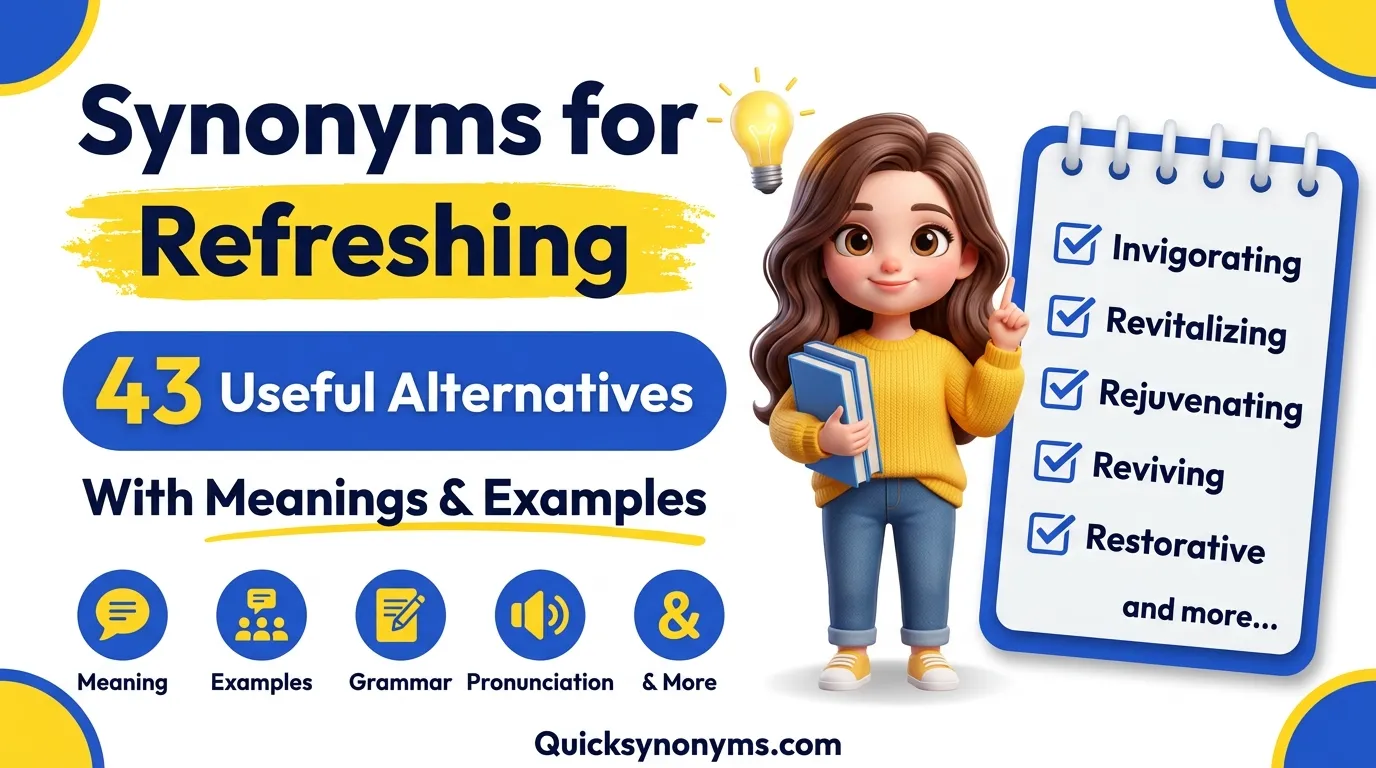
Refreshing is a word that describes something that makes you feel fresh, cool, rested, or full of energy. Imagine drinking a glass of cold water on a hot day. You might call that drink refreshing because it helps you feel better. The word is also used for new ideas, kind people, and pleasant changes that make life feel better.
Learning synonyms for refreshing helps you express your thoughts in more ways. English learners can use these words to grow their vocabulary, while students and content writers can make their writing clear and interesting. The right synonym can also help you share a feeling with greater care.
This guide covers the meaning of refreshing, 43 useful synonyms, and examples of each word. You will also learn about pronunciation, grammar, word history, common antonyms, and groups of related meanings.
Meaning of Refreshing
Definition
Refreshing (adjective): Making someone feel fresh, rested, cool, or full of new energy, or giving a pleasant feeling of something new.
Examples
- A refreshing drink helped me feel better after the long walk.
- Her refreshing ideas made the class more fun.
Connotative Meaning
- Positive tone: Pleasant, lively, helpful, and full of new energy.
- Negative tone: Usually positive, but it may sound ironic when something is called refreshing even though it is not.
- Neutral tone: Giving a fresh feeling or a sense of change without a strong emotional judgment.
(Connotation: the emotional or cultural feeling a word carries beyond its literal meaning.)
Etymology
The word refreshing comes from the verb refresh, which entered Middle English through Old French refreschir, meaning to make fresh again or revive. The word combines the idea of doing something again with the idea of freshness.
- Old French: Refreschir meant to make fresh again or revive. It came from fresche, meaning fresh.
- Middle English (1100 to 1500): Refreshen was used to mean making fresh, restoring strength, or giving new energy.
- Modern English (1500 to present): Refresh developed into its current forms. Refreshing became a common adjective for things that restore energy or provide a pleasant change.
Pronunciation (IPA)
- IPA: /rɪˈfreʃɪŋ/
- Syllables: re-fresh-ing
Affixation Pattern of Refreshing
- Root: Fresh, meaning new, clean, or not tired.
- Prefix: Re, meaning again.
- Suffix: Ing, used to form a present participle and adjectives.
- Word formations:
- Refresh (verb): To make fresh or active again.
- Refreshed (adjective): Feeling rested or renewed.
- Refreshing (adjective): Making someone feel fresh or renewed.
- Refreshment (noun): Food, drink, or rest that helps restore energy.
- Refresher (noun): Something that helps a person remember or learn something again.
43 Synonyms of Refreshing: With Meaning and Examples
1. Invigorating (adjective)
Meaning: Giving someone more energy, strength, or excitement.
Examples:
- The invigorating walk woke me up.
- A swim in the cool lake felt invigorating.
2. Revitalizing (adjective)
Meaning: Giving new life, energy, or strength to someone or something.
Examples:
- The revitalizing rest helped her feel better.
- We enjoyed a revitalizing break in the garden.
3. Rejuvenating (adjective)
Meaning: Making someone feel young, fresh, or full of energy again.
Examples:
- The rejuvenating massage eased his tired muscles.
- A quiet weekend was rejuvenating for the family.
4. Reviving (adjective)
Meaning: Helping someone regain energy, strength, or alertness.
Examples:
- The reviving breeze cooled our faces.
- She drank a reviving cup of tea.
5. Restorative (adjective)
Meaning: Helping someone regain health, strength, or energy.
Examples:
- The restorative sleep helped him recover.
- A restorative holiday gave her time to rest.
6. Energizing (adjective)
Meaning: Making someone feel more active and ready to act.
Examples:
- The energizing music lifted our spirits.
- A short run was an energizing start to the day.
7. Stimulating (adjective)
Meaning: Making the mind or body more active and alert.
Examples:
- We had a stimulating talk about science.
- The stimulating game kept the children focused.
8. Bracing (adjective)
Meaning: Pleasantly strong or cool in a way that wakes you up.
Examples:
- The bracing sea air cleared my head.
- We took a bracing walk on the cold morning.
9. Cooling (adjective)
Meaning: Making something less hot or helping someone feel cooler.
Examples:
- A cooling drink eased her thirst.
- The cooling shade gave us relief from the sun.
10. Crisp (adjective)
Meaning: Pleasantly cool, fresh, and clear.
Examples:
- We enjoyed the crisp morning air.
- The crisp breeze made the walk more pleasant.
11. Fresh (adjective)
Meaning: New, clean, or pleasant in a way that restores a good feeling.
Examples:
- The fresh air helped me think clearly.
- She changed into fresh clothes after the hike.
12. Freshening (adjective)
Meaning: Making something feel or smell cleaner and fresher.
Examples:
- The freshening breeze cooled the room.
- A freshening spray made the bathroom smell clean.
13. Brisk (adjective)
Meaning: Quick, lively, and often pleasantly cool.
Examples:
- We took a brisk walk before breakfast.
- A brisk wind blew across the field.
14. Lively (adjective)
Meaning: Full of energy, activity, or cheerful movement.
Examples:
- The lively music made everyone dance.
- Their lively talk made the dinner more fun.
15. Enlivening (adjective)
Meaning: Making something more active, cheerful, or interesting.
Examples:
- The enlivening story caught the class’s attention.
- Colorful flowers gave the room an enlivening touch.
16. Reinvigorating (adjective)
Meaning: Giving back energy or strength that has been lost.
Examples:
- The reinvigorating break helped us finish our work.
- A reinvigorating swim lifted his mood.
17. Renewing (adjective)
Meaning: Bringing back strength, hope, or a sense of new life.
Examples:
- The renewing rest helped her face the week.
- Their renewing friendship brought him joy.
18. Uplifting (adjective)
Meaning: Making someone feel happier, more hopeful, or more positive.
Examples:
- The uplifting song made me smile.
- Her uplifting words gave us hope.
19. Heartening (adjective)
Meaning: Giving someone hope or making them feel encouraged.
Examples:
- The heartening news made the family happy.
- His heartening message gave us courage.
20. Encouraging (adjective)
Meaning: Giving someone hope or confidence to keep going.
Examples:
- The encouraging feedback helped me improve.
- Her encouraging smile made the child feel safe.
21. Inspiring (adjective)
Meaning: Making someone want to do something good or creative.
Examples:
- The inspiring speech moved the crowd.
- Her inspiring story gave me a new goal.
22. Delightful (adjective)
Meaning: Giving great pleasure or happiness.
Examples:
- We had a delightful afternoon in the park.
- The delightful news made everyone cheer.
23. Pleasing (adjective)
Meaning: Giving enjoyment or satisfaction.
Examples:
- The pleasing colors made the room feel calm.
- We heard a pleasing tune from the garden.
24. Welcome (adjective)
Meaning: Wanted or appreciated because it brings relief or pleasure.
Examples:
- The welcome rain cooled the dry ground.
- A welcome break helped us finish the task.
25. Charming (adjective)
Meaning: Pleasant and attractive in a way that makes people like it.
Examples:
- The charming village was full of flowers.
- His charming manner made guests feel at ease.
26. Engaging (adjective)
Meaning: Interesting and able to hold someone’s attention.
Examples:
- The engaging lesson made science fun.
- She gave an engaging talk about travel.
27. Interesting (adjective)
Meaning: Making someone curious or eager to learn more.
Examples:
- The interesting book kept me reading.
- We had an interesting chat about art.
28. Exciting (adjective)
Meaning: Making someone feel eager, happy, or full of interest.
Examples:
- The exciting game kept us on our feet.
- They planned an exciting trip to the mountains.
29. Novel (adjective)
Meaning: New, unusual, or different from what people know.
Examples:
- The novel idea changed how we solved the problem.
- She tried a novel way to teach spelling.
30. Original (adjective)
Meaning: New and creative rather than copied from others.
Examples:
- His original design caught our attention.
- The team shared an original plan for the event.
31. Unconventional (adjective)
Meaning: Different from what is usual or expected.
Examples:
- Her unconventional style made the show memorable.
- The teacher used an unconventional way to explain math.
32. Surprising (adjective)
Meaning: Causing wonder because something is not expected.
Examples:
- The surprising result made us cheer.
- His surprising answer started a lively debate.
33. Unexpected (adjective)
Meaning: Happening or appearing without being planned or predicted.
Examples:
- The unexpected visit made our day.
- An unexpected gift brought her joy.
34. Wholesome (adjective)
Meaning: Good for the body or mind and likely to support well-being.
Examples:
- The wholesome meal gave us lasting energy.
- They enjoyed a wholesome film together.
35. Clean (adjective)
Meaning: Free from dirt, unpleasant smells, or unwanted things.
Examples:
- The clean scent of soap filled the room.
- We enjoyed the clean air after the rain.
36. Pure (adjective)
Meaning: Free from dirt or unwanted material, or simple and clear in quality.
Examples:
- The pure mountain air felt wonderful.
- She enjoyed the pure taste of fresh water.
37. Airy (adjective)
Meaning: Open, light, and filled with air.
Examples:
- The airy room felt cool and calm.
- We sat in an airy cafe near the beach.
38. Breezy (adjective)
Meaning: Pleasantly windy or light in style and mood.
Examples:
- The breezy afternoon was perfect for a walk.
- His breezy manner made the meeting feel easy.
39. Temperate (adjective)
Meaning: Mild in temperature, without too much heat or cold.
Examples:
- The temperate climate suited the garden.
- We enjoyed the temperate weather in spring.
40. Dewy (adjective)
Meaning: Covered with tiny drops of water, often in a fresh morning scene.
Examples:
- The dewy grass sparkled in the sunlight.
- She walked through the dewy garden at dawn.
41. Sparkling (adjective)
Meaning: Shining brightly or seeming full of life and energy.
Examples:
- The sparkling water looked inviting.
- Her sparkling eyes showed her joy.
42. Inviting (adjective)
Meaning: Appealing and making someone want to come closer or take part.
Examples:
- The inviting pool looked cool on a hot day.
- The inviting garden offered a peaceful place to rest.
43. Appealing (adjective)
Meaning: Attractive or pleasing enough to make someone interested.
Examples:
- The appealing design made the website easy to enjoy.
- A quiet walk seemed appealing after a busy day.
Prototype Meaning
The most typical meaning of refreshing is something that helps a person feel better, cooler, or more energetic after being tired or uncomfortable. People often imagine a cool drink, a gentle breeze, a short rest, or a walk in fresh air. The word can also describe a person, idea, or experience that feels pleasantly new and different from the usual.
Prototype Categorization
The 43 synonyms fit into several groups based on their main meaning. Each group helps you choose a word that matches the feeling or idea you want to share.
– Energy and Renewal: Invigorating, revitalizing, rejuvenating, reviving, restorative, energizing, reinvigorating, renewing. Use these words when something restores strength, energy, or well-being.
– Mental Activity and Alertness: Stimulating, bracing, brisk, lively, enlivening. Use these when something wakes up the mind or adds activity and excitement.
– Coolness and Fresh Air: Cooling, crisp, fresh, freshening, airy, breezy, temperate, dewy. Use these for weather, drinks, rooms, outdoor scenes, and other pleasant physical sensations.
– Happiness and Hope: Uplifting, heartening, encouraging, inspiring, delightful, pleasing, welcome, charming. Use these when something brings joy, comfort, hope, or relief.
– Interest and Engagement: Engaging, interesting, exciting, sparkling, appealing, inviting. Use these when something catches attention or makes people eager to take part.
– Novelty and Change: Novel, original, unconventional, surprising, unexpected. Use these when an idea, event, or experience feels new or different from the usual.
– Health and Cleanliness: Wholesome, clean, pure. Use these to describe healthy choices, clean surroundings, or simple and fresh qualities.
Grouping synonyms helps writers choose words that match their exact meaning. It also makes writing more natural and helps avoid repeating the same word too often.
Antonyms of Refreshing
- Stale (adjective): No longer fresh or pleasant.
- Stuffy (adjective): Lacking fresh air and feeling uncomfortable.
- Tiring (adjective): Making someone feel tired.
- Exhausting (adjective): Using up a great deal of energy.
- Draining (adjective): Taking away energy or strength.
- Dull (adjective): Lacking interest or excitement.
- Tedious (adjective): Boring because something takes too long or feels repetitive.
- Oppressive (adjective): Unpleasantly heavy, hot, or difficult to bear.
Short Questions and Answers
What does Refreshing mean?
Refreshing means making someone feel fresh, cool, rested, or full of energy. It can also describe a pleasant new idea or experience.
When should Refreshing be used?
Use refreshing when talking about something that brings relief, restores energy, or feels pleasantly different. It works well for drinks, weather, activities, people, ideas, and experiences.
Is Refreshing positive or negative?
Refreshing is usually positive because it suggests relief, comfort, or new energy. Its meaning may change with context, especially when someone uses it sarcastically.
How is it different from similar words?
Invigorating focuses on giving energy and strength. Revitalizing suggests bringing back life or energy, while rejuvenating often suggests feeling young or renewed again. All three are close to refreshing, but each highlights a slightly different effect.
Conclusion
Learning the synonyms of refreshing helps you describe feelings, experiences, and ideas with greater care. Words such as invigorating, revitalizing, and rejuvenating focus on new energy, while delightful, uplifting, and inspiring focus more on positive feelings. Choosing the right word makes your meaning clearer and your writing more interesting.
These words can also help English learners speak with greater confidence, write better stories, and create useful content without repeating the same expressions. Try to notice how writers use these words in books, lessons, and daily conversations. Practice choosing a synonym that fits each situation, and remember that close synonyms may carry different shades of meaning.
Build your vocabulary one word at a time. Read a new word each day, write your own examples, and use what you learn in daily speech. With regular practice, your English will become clearer, richer, and more natural.
See Synonyms: Synonyms for Type: 39 Useful Alternatives

Content Editor & Language Researcher
Daniel Foster specializes in editing educational content and researching English language topics. He is committed to creating well-structured, reader-friendly articles that make learning easier.