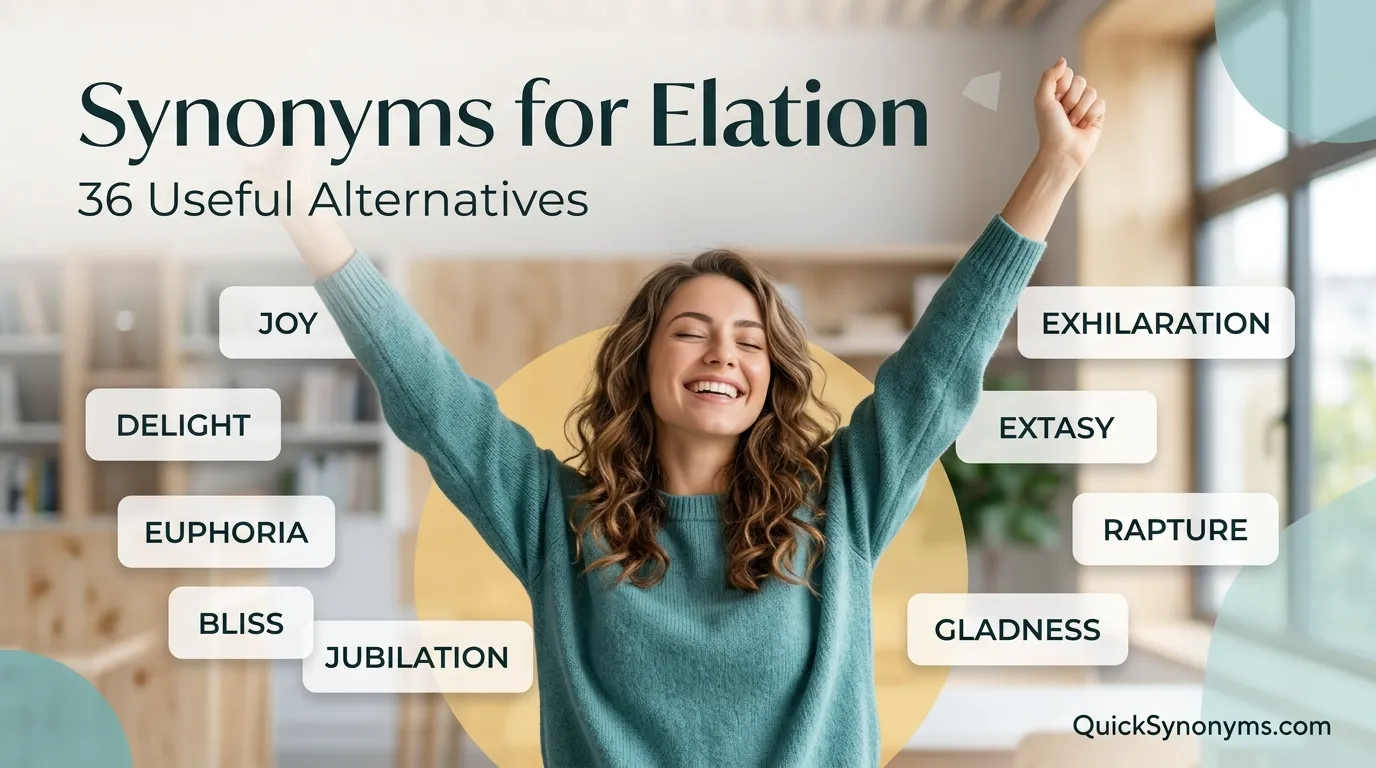
Joy, happiness, delight, euphoria, exhilaration, excitement, pleasure, bliss, ecstasy, jubilation, cheerfulness, gladness, glee, merriment, triumph, satisfaction, contentment, enthusiasm, optimism, high spirits, rapture, exultation, celebration, buoyancy, exuberance, cheer, felicity, gratification, enjoyment, and thrill are useful synonyms for elation.
Elation means a strong feeling of happiness, excitement, or joy. Imagine getting a message that you have been accepted into your dream job. You may smile, feel excited, and want to celebrate. That powerful feeling is elation. The word is common in English because it describes more than simple happiness. It often shows a sudden or intense rise in positive emotion. Learning synonyms for elation can help English learners understand different shades of meaning and avoid using the same word again and again. Content writers can also use these alternatives to make their writing more natural and expressive. In this guide, you will learn the meaning of elation, its examples, connotation, etymology, pronunciation, word formation, synonyms, antonyms, and semantic categories.
Meaning of Elation
Definition
Elation (Noun):
Elation is a strong feeling of great happiness, excitement, or joy.
Examples
- She felt elation when she received the good news.
- His face showed pure elation after winning the competition.
Connotative Meaning
Connotation means the feeling or idea that a word suggests beyond its basic meaning.
- Positive tone: Elation strongly suggests happiness, success, excitement, and emotional pleasure.
- Negative tone: Elation is normally positive, but extreme elation can sometimes suggest uncontrolled excitement.
- Neutral tone: In factual writing, elation can simply describe a person’s strong feeling of happiness.
Etymology
The word elation comes from Latin and is connected with the idea of being raised or lifted up emotionally.
- Old English (450–1100): The modern word elation was not part of Old English vocabulary. English used other words to describe joy and happiness.
- Middle English (1100–1500): Latin-based vocabulary became more common in English through French and scholarly influence. Words connected with raising, lifting, and emotional states developed stronger abstract meanings.
- Modern English (1500–Present): Elation developed into its modern meaning of intense happiness, excitement, or emotional uplift.
The word comes from Latin elatio, meaning “a raising” or “lifting up,” from efferre, meaning “to carry out” or “raise up.”
Pronunciation (IPA)
- IPA: /ɪˈleɪʃən/
- Syllables: e-la-tion
Affixation Pattern of Elation
- Root: lat / fer is connected with the Latin idea of carrying or bringing, with the historical form linked to efferre.
- Prefix: e- appears in the Latin formation and is related to the idea of “out.”
- Suffix: -ion, which forms nouns describing actions, states, or results.
- Word formations:
- elation – noun
- elated – adjective
- elate – verb
- elating – verb form
- elatedly – adverb
- elation-filled – adjective phrase
37 Synonyms of Elation With Meaning & Examples
1. Joy (Noun)
Meaning: A strong feeling of happiness and pleasure.
Examples:
- The children shouted with joy.
- She felt great joy when her family arrived.
2. Happiness (Noun)
Meaning: A general feeling of being pleased and content.
Examples:
- His success brought him great happiness.
- She found happiness in helping others.
3. Delight (Noun)
Meaning: A feeling of great pleasure or happiness.
Examples:
- The gift filled her with delight.
- He watched the show with obvious delight.
4. Euphoria (Noun)
Meaning: An extremely strong feeling of happiness and excitement.
Examples:
- The victory created a wave of euphoria.
- She experienced euphoria after reaching her goal.
5. Exhilaration (Noun)
Meaning: A powerful feeling of excitement and energy.
Examples:
- The race gave him a sense of exhilaration.
- She felt exhilaration as the plane took off.
6. Excitement (Noun)
Meaning: A strong feeling of enthusiasm about something happening.
Examples:
- The news caused great excitement.
- The children waited with excitement.
7. Pleasure (Noun)
Meaning: A feeling of enjoyment or satisfaction.
Examples:
- She took great pleasure in her work.
- The beautiful music gave him pleasure.
8. Bliss (Noun)
Meaning: A state of complete happiness or peace.
Examples:
- They spent the afternoon in peaceful bliss.
- The holiday gave her a feeling of bliss.
9. Ecstasy (Noun)
Meaning: An extremely intense feeling of happiness.
Examples:
- The fans screamed in ecstasy after the win.
- She was overcome with ecstasy when she heard the news.
10. Jubilation (Noun)
Meaning: Great happiness expressed through celebration.
Examples:
- The streets were filled with jubilation.
- There was widespread jubilation after the announcement.
11. Cheerfulness (Noun)
Meaning: A happy and positive state of mind.
Examples:
- Her cheerfulness made everyone smile.
- He greeted his guests with cheerfulness.
12. Gladness (Noun)
Meaning: A feeling of happiness or pleasure.
Examples:
- She accepted the news with gladness.
- His heart was filled with gladness.
13. Glee (Noun)
Meaning: A lively and playful feeling of happiness.
Examples:
- The children laughed with glee.
- He showed glee when he opened the present.
14. Merriment (Noun)
Meaning: Cheerful fun, laughter, and enjoyment.
Examples:
- The party was full of merriment.
- Their laughter added to the merriment.
15. Triumph (Noun)
Meaning: A strong feeling of happiness caused by success or victory.
Examples:
- She raised her hands in triumph.
- Winning the final match was a moment of triumph.
16. Satisfaction (Noun)
Meaning: A pleased feeling that comes from achieving or receiving something desired.
Examples:
- He felt deep satisfaction after finishing the project.
- The result gave her great satisfaction.
17. Contentment (Noun)
Meaning: A calm feeling of happiness and satisfaction.
Examples:
- He lived with a sense of contentment.
- The quiet evening brought her contentment.
18. Enthusiasm (Noun)
Meaning: Strong interest, excitement, or eagerness.
Examples:
- She joined the project with enthusiasm.
- His enthusiasm inspired the whole team.
19. Optimism (Noun)
Meaning: A hopeful and positive attitude about the future.
Examples:
- She faced the challenge with optimism.
- His optimism helped the team stay focused.
20. High Spirits (Noun Phrase)
Meaning: A cheerful and energetic emotional state.
Examples:
- The students were in high spirits after the trip.
- Everyone returned home in high spirits.
21. Rapture (Noun)
Meaning: A state of intense happiness or delight.
Examples:
- She listened to the music in rapture.
- The beautiful view filled him with rapture.
22. Exultation (Noun)
Meaning: A feeling of great happiness caused by success or victory.
Examples:
- The players celebrated in exultation.
- His face showed exultation after the victory.
23. Celebration (Noun)
Meaning: An event or expression of happiness about something special.
Examples:
- The victory led to a huge celebration.
- Their wedding was a joyful celebration.
24. Buoyancy (Noun)
Meaning: A cheerful and hopeful emotional quality.
Examples:
- Her natural buoyancy lifted everyone’s mood.
- He approached the problem with emotional buoyancy.
25. Exuberance (Noun)
Meaning: Very energetic and enthusiastic happiness.
Examples:
- The children showed great exuberance.
- His exuberance was impossible to ignore.
26. Cheer (Noun)
Meaning: A feeling or expression of happiness and positive energy.
Examples:
- Her smile brought cheer to the room.
- The holiday season was filled with cheer.
27. Felicity (Noun)
Meaning: Intense happiness or great satisfaction.
Examples:
- The couple enjoyed years of domestic felicity.
- She spoke with felicity about her new life.
28. Gratification (Noun)
Meaning: Pleasure gained from achieving or receiving something wanted.
Examples:
- Completing the task gave him a sense of gratification.
- She felt gratification after helping the student.
29. Enjoyment (Noun)
Meaning: The feeling of pleasure gained from something.
Examples:
- He gets great enjoyment from reading.
- The concert gave everyone hours of enjoyment.
30. Thrill (Noun)
Meaning: A sudden strong feeling of excitement and pleasure.
Examples:
- She felt a thrill when she heard her name.
- Winning the prize gave him a real thrill.
31. Uplift (Noun)
Meaning: A feeling of improved happiness, hope, or confidence.
Examples:
- The kind message gave her an emotional uplift.
- The good news provided a welcome uplift.
32. Elation (Noun)
Meaning: An intense state of happiness, excitement, or emotional uplift.
Examples:
- His elation was clear after the announcement.
- She could hardly hide her elation.
33. Festivity (Noun)
Meaning: Happiness and celebration connected with a special occasion.
Examples:
- The town was alive with festivity.
- Music filled the streets during the festivity.
34. Joviality (Noun)
Meaning: A friendly and cheerful mood.
Examples:
- His joviality made the dinner enjoyable.
- The room was filled with joviality.
35. Liveliness (Noun)
Meaning: Energetic and cheerful behavior or mood.
Examples:
- Her liveliness made the meeting more enjoyable.
- The children’s liveliness filled the house.
36. Transport (Noun)
Meaning: A state of being carried away by powerful emotion, especially joy.
Examples:
- She listened to the song in a state of transport.
- He was carried away by transport after the victory.
Prototype Meaning
The prototype meaning of elation is a powerful feeling of happiness that rises because something good has happened. When people hear the word, they often imagine a person celebrating after winning, receiving good news, reaching an important goal, or experiencing a major success. Unlike ordinary happiness, elation usually suggests a stronger and more noticeable emotional response.
Prototype Categorization
The synonyms of elation can be grouped by their main emotional meaning. This helps writers select the word that best fits the situation instead of treating every synonym as exactly the same.
- General happiness: Joy, happiness, gladness, cheer, and enjoyment describe broad positive feelings.
- Intense happiness: Euphoria, ecstasy, rapture, exultation, and elation describe very strong emotional pleasure.
- Excitement and energy: Exhilaration, excitement, thrill, enthusiasm, exuberance, and liveliness emphasize energy and stimulation.
- Calm satisfaction: Contentment, satisfaction, gratification, bliss, and felicity suggest peaceful or lasting pleasure.
- Celebration and victory: Jubilation, triumph, celebration, festivity, and glee often appear when happiness is publicly expressed.
- Positive emotional attitude: Optimism, buoyancy, cheerfulness, joviality, and uplift focus on a positive mood or outlook.
- Playful happiness: Glee, merriment, joviality, and cheerfulness often describe lively social happiness.
Choosing a synonym from the right category makes writing more accurate. For example, euphoria is stronger than pleasure, while contentment is calmer than exhilaration.
Antonyms of Elation
1. Sadness (Noun)
A feeling of unhappiness or sorrow.
2. Sorrow (Noun)
Deep emotional pain or sadness.
3. Misery (Noun)
A state of great unhappiness or suffering.
4. Depression (Noun)
A low or deeply unhappy emotional state.
5. Despair (Noun)
A complete loss of hope.
6. Gloom (Noun)
A dark, unhappy, or pessimistic mood.
7. Disappointment (Noun)
Sadness caused by an unwanted result.
8. Dejection (Noun)
A state of low spirits or discouragement.
Short Questions and Answers
What does elation mean?
Elation means an intense feeling of happiness, excitement, or joy, often caused by success or good news.
When should elation be used?
Use elation when you want to describe a strong emotional feeling of happiness. It works well in personal stories, formal writing, news reports, and descriptive writing.
Is elation positive or negative?
Elation is positive. It normally describes strong happiness, excitement, or emotional pleasure.
How is elation different from similar words?
Elation is stronger than ordinary happiness. Joy can be broad and lasting, euphoria is usually more intense, excitement focuses more on energy, and contentment suggests calm satisfaction.
Conclusion
Learning synonyms for elation gives you more ways to describe happiness, excitement, success, and pleasure. Words such as joy, delight, and happiness work well in everyday English, while euphoria, rapture, and exultation can describe much stronger emotions. Other choices, such as contentment, satisfaction, and gratification, are better when the feeling is calm or connected to achievement. Using the right synonym helps you avoid repetition and makes your writing clearer and more expressive. It can also improve speaking skills by giving you more precise words for different situations. Try learning a few new synonyms each day and use them in your own sentences. With regular practice, your vocabulary will grow and your confidence in English will become stronger.
Bilkul. Conclusion ke baad naturally is tarah fit kar dein:
If you want to explore more useful word alternatives, check out Synonyms for Ironically: 30 Powerful Alternatives for more ways to improve your vocabulary and make your writing more precise.

Senior English Language Expert
Eleanor Brooks specializes in English grammar, vocabulary, and word usage. She enjoys simplifying complex language concepts and creating practical resources that help learners write and speak with confidence.