Hooray is an exclamation used to show joy, excitement, or approval. You might shout “Hooray!” when your team wins a game, you pass an exam, or you receive good news. It is a simple, cheerful word that helps people share happy feelings.
Learning synonyms for hooray helps you express excitement in different ways. Some words show loud joy, while others express praise, relief, or support. Therefore, choosing the right expression can make your speaking and writing more lively.
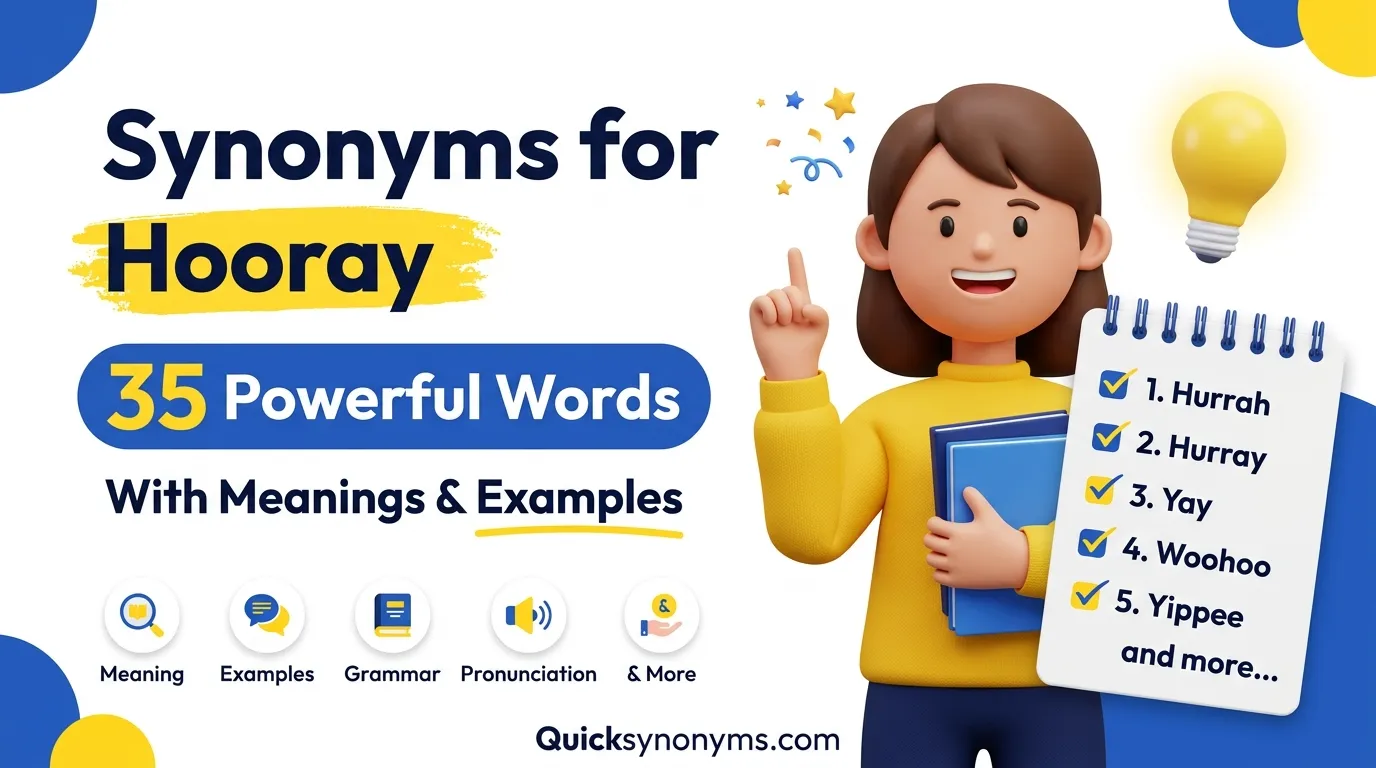
In this guide, you will learn the meaning of hooray, 35 related words and expressions, simple examples, pronunciation, grammar, and word history. You will also explore groups of similar expressions to help you find the best choice for celebrations, conversations, stories, and messages.
Meaning of Hooray
Definition
Hooray (interjection): A word shouted to show joy, excitement, celebration, or approval.
Examples
- Hooray! We won the school football match.
- Everyone shouted hooray when the results came out.
Connotative Meaning
- Positive tone: Hooray expresses happiness, success, excitement, and celebration.
- Negative tone: It can sound sarcastic when someone uses it to mock a situation.
- Neutral tone: It can simply mark a moment of joy or approval.
Connotation means the feeling or idea a word carries beyond its basic meaning.
Etymology
The word hooray is an expression of cheering. It is related to hurrah and hoorah, which developed as cries of encouragement and celebration. Its exact origin is uncertain.
- Old English (450 to 1100): Not applicable. There is no established Old English form that directly explains hooray.
- Middle English (1100 to 1500): Not applicable as a confirmed direct origin.
- Modern English (1500 to present): Hooray became a familiar cheer used to express happiness, approval, or triumph. It is related to other cheering expressions, including hurrah.
Pronunciation (IPA)
- IPA: /hʊˈreɪ/
- Syllables: hoo-ray
Affixation Pattern of Hooray
- Root: Hooray, a complete exclamation.
- Prefix: None.
- Suffix: None.
- Word formations:
- Hooray (interjection): A cheer showing happiness or approval.
- Hoorays (plural noun): More than one cheer, as in “three hoorays.”
- Hoorayed (verb, informal): Shouted hooray, though this form is uncommon.
- Hooraying (verb, informal): Shouting hooray, though this form is uncommon.
35 Synonyms of Hooray: With Meaning and Examples
1. Hurrah (interjection)
Meaning: A cheer used to express joy, success, or approval.
Examples:
- Hurrah! Our team won the final.
- Everyone cried hurrah when the winner was announced.
2. Hurray (interjection)
Meaning: Another spelling of hooray used to show happiness or excitement.
Examples:
- Hurray! We are going on holiday.
- The children shouted hurray after the game.
3. Yay (interjection)
Meaning: An informal exclamation of happiness or excitement.
Examples:
- Yay! I passed my driving test.
- She shouted yay when she opened the gift.
4. Woohoo (interjection)
Meaning: An excited cry used to celebrate something good.
Examples:
- Woohoo! We finished the project.
- He yelled woohoo after scoring a goal.
5. Yippee (interjection)
Meaning: A cheerful exclamation used to express delight.
Examples:
- Yippee! School is closed tomorrow.
- The children shouted yippee when the trip began.
6. Huzzah (interjection)
Meaning: A lively cheer used to show triumph or celebration.
Examples:
- Huzzah! The long journey is over.
- The crowd called out huzzah for the champion.
7. Cheers (interjection)
Meaning: A word used to express goodwill, support, or celebration.
Examples:
- Cheers! We finally reached our goal.
- The team raised their glasses and said cheers.
8. Bravo (interjection)
Meaning: A word used to praise someone’s excellent work or performance.
Examples:
- Bravo! You played that song beautifully.
- The audience called bravo after the show.
9. Congratulations (interjection)
Meaning: Words used to express pleasure at someone’s success or good news.
Examples:
- Congratulations! You earned the top prize.
- Everyone said congratulations to the new graduate.
10. Hoorah (interjection)
Meaning: A cheer used to express excitement, approval, or victory.
Examples:
- Hoorah! The team reached the final.
- The crowd shouted hoorah as the parade passed.
11. Yip (interjection)
Meaning: A short cry that can express excitement or delight.
Examples:
- Yip! We got tickets to the concert.
- She gave a happy yip when she saw her friend.
12. Woo (interjection)
Meaning: A cry used to show excitement, approval, or enthusiasm.
Examples:
- Woo! Our class won the contest.
- The fans shouted woo when the singer appeared.
13. Hoorayness (noun, informal)
Meaning: A playful term for a feeling or display of celebration.
Examples:
- The party was full of hoorayness and laughter.
- Her message brought a little hoorayness to the group.
14. Hallelujah (interjection)
Meaning: An exclamation of joy, praise, or relief, often with a religious connection.
Examples:
- Hallelujah! We finally found the missing keys.
- She cried hallelujah when the good news arrived.
15. Alleluia (interjection)
Meaning: An expression of praise or joy, often used in religious settings.
Examples:
- Alleluia! The choir sang with joy.
- The congregation sang alleluia together.
16. Hooraying (noun, informal)
Meaning: The act of shouting hooray to celebrate something.
Examples:
- The crowd’s hooraying filled the stadium.
- Their hooraying continued after the winning goal.
17. Cheers of joy (noun phrase)
Meaning: Happy shouts made to celebrate an event.
Examples:
- Cheers of joy filled the room after the announcement.
- We heard cheers of joy from the winning team.
18. Acclaim (noun)
Meaning: Public praise for someone or something successful.
Examples:
- The young actor received acclaim for his role.
- Her book earned acclaim from many readers.
19. Applause (noun)
Meaning: Clapping used to show approval or appreciation.
Examples:
- The audience gave loud applause after the performance.
- Her speech ended with warm applause.
20. Jubilation (noun)
Meaning: A feeling or display of great happiness after success.
Examples:
- Jubilation spread through the town after the victory.
- The players celebrated with jubilation.
21. Exultation (noun)
Meaning: A feeling of great joy after a success or victory.
Examples:
- Exultation filled the team after the final whistle.
- His face showed exultation when he won the prize.
22. Celebration (noun)
Meaning: An event or activity that marks a happy occasion.
Examples:
- The family held a celebration after graduation.
- Their celebration lasted late into the night.
23. Cheer (noun)
Meaning: A shout that shows happiness, support, or approval.
Examples:
- One loud cheer rose from the crowd.
- Her success brought a cheer from her friends.
24. Acclamation (noun)
Meaning: Public praise or approval expressed by a group.
Examples:
- The winner received acclamation from the audience.
- The proposal was greeted with acclamation.
25. Triumph (noun)
Meaning: A great success or victory that brings happiness.
Examples:
- Their triumph made the whole school proud.
- The final goal was a moment of triumph.
26. Delight (noun)
Meaning: A feeling of great pleasure or happiness.
Examples:
- The children jumped with delight at the surprise.
- Her delight was clear when she saw the gift.
27. Elation (noun)
Meaning: A strong feeling of happiness and excitement.
Examples:
- He felt elation after passing the exam.
- Elation swept through the team after its win.
28. Glee (noun)
Meaning: A feeling of lively happiness or excitement.
Examples:
- The children shouted with glee during the game.
- She could not hide her glee at the news.
29. Ecstasy (noun)
Meaning: A feeling of overwhelming happiness or joy.
Examples:
- The fans were in ecstasy after the historic win.
- She felt ecstasy when her dream came true.
30. Exhilaration (noun)
Meaning: A feeling of excitement and energy.
Examples:
- The race filled him with exhilaration.
- She felt exhilaration as the team crossed the finish line.
31. Merriment (noun)
Meaning: Happiness and fun shared by people.
Examples:
- Merriment filled the hall during the party.
- The evening was full of merriment and laughter.
32. Festivity (noun)
Meaning: A joyful activity or mood linked to a celebration.
Examples:
- Festivity filled the streets during the festival.
- The room was bright with color and festivity.
33. Rejoicing (noun)
Meaning: The act of showing great happiness about good news or success.
Examples:
- Rejoicing began when the results were announced.
- The town was filled with rejoicing after the victory.
34. Acclamation (noun)
Meaning: Strong public approval or praise for a person or achievement.
Examples:
- The singer was welcomed with acclamation.
- The team received acclamation for its hard work.
35. Praise (noun)
Meaning: Words or actions that show approval or admiration.
Examples:
- The teacher gave praise to the winning team.
- Her hard work earned praise from her coach.
Usage note: The closest direct alternatives to hooray are hurrah, hurray, yay, woohoo, and yippee. Other words on this list describe the joy, praise, or celebration connected with a cheer rather than replacing the exclamation itself.
Prototype Meaning
The most typical meaning of hooray is a happy shout made when something good happens. People often use it after a win, a piece of good news, or the end of a difficult task.
When someone hears hooray, they usually imagine a person or crowd cheering with excitement. The word is informal, lively, and easy to understand, which makes it common in everyday speech and stories.
Prototype Categorization
- Direct cheers: Hurrah, Hurray, Yay, Woohoo, Yippee, Huzzah, Hoorah, Yip, Woo. Use these expressions when you want to shout with excitement or celebrate good news.
- Praise and approval: Bravo, Congratulations, Cheers, Acclaim, Applause, Acclamation, Praise. Use these words to show approval, honor success, or praise someone’s work.
- Religious or traditional joy: Hallelujah, Alleluia. Use these expressions when joy or praise has a religious meaning or tone.
- Joyful feelings: Jubilation, Exultation, Delight, Elation, Glee, Ecstasy, Exhilaration. Use these nouns to describe strong happiness rather than the cheer itself.
- Celebrations and shared happiness: Celebration, Cheer, Cheers of joy, Hoorayness, Hooraying, Rejoicing, Merriment, Festivity, Triumph. Use these words to describe happy events, excited crowds, or the feeling of success.
Grouping these words helps you tell the difference between a shout, a feeling, and an event. This makes it easier to select a natural expression for each situation.
Antonyms of Hooray
There is no exact opposite of hooray in every context. However, these words express feelings or reactions that contrast with joy and celebration.
- Alas (interjection): An expression of sadness or regret.
- Boo (interjection): A cry used to show disapproval or dislike.
- Groan (noun): A sound that shows pain, disappointment, or frustration.
- Lament (noun): An expression of sorrow or grief.
- Sorrow (noun): A feeling of deep sadness.
- Disappointment (noun): Unhappiness when something does not meet expectations.
- Mourning (noun): The act of showing sadness after a death or great loss.
Short Questions and Answers
What does Hooray mean?
Hooray is an exclamation used to show happiness, excitement, approval, or celebration. People often shout it after a win or good news.
When should Hooray be used?
Use hooray in informal conversations, celebrations, messages, and stories when you want to express joy. For example, say “Hooray! We passed the test!”
Is Hooray positive or negative?
Hooray is usually positive because it expresses happiness or approval. However, it can sound sarcastic when used to mock an event or show false excitement.
How is it different from similar words?
Yay is casual and common in everyday speech. Hurrah sounds more traditional and can suit a group cheer. Bravo is mainly used to praise someone’s performance or achievement.
Conclusion
Learning synonyms for hooray gives you more ways to express joy, excitement, and approval. Words such as yay, hurrah, and woohoo work well as direct cheers. Meanwhile, words such as jubilation, delight, and elation describe the feelings that come with happy moments.
These expressions can make your conversations, stories, greeting cards, and social media posts more lively. However, remember that not every synonym fits the same situation. Choose a direct cheer when you want to celebrate aloud, or a noun when you want to describe the feeling.
Start by learning a few expressions each day. Practice them in simple sentences and use them when the moment feels right. With daily vocabulary practice, you can express yourself more naturally and build confidence in English.
Discover More: Synonyms for Hunger: 36 Words to Know

Senior English Language Expert
Eleanor Brooks specializes in English grammar, vocabulary, and word usage. She enjoys simplifying complex language concepts and creating practical resources that help learners write and speak with confidence.